
When OEMs begin planning for environmental protection, the conversation often starts with NEMA and IP ratings such as “We need IP67.” “We need a NEMA 4X enclosure.”
These ratings serve as helpful benchmarks, but they describe only the required protection level, not how to design or build an enclosure that achieves performance in actual operating conditions. Products encounter more than dust or water: they face chemicals, thermal cycling, vibration, submersion, field handling, outdoor exposure, and repeated cleaning cycles.
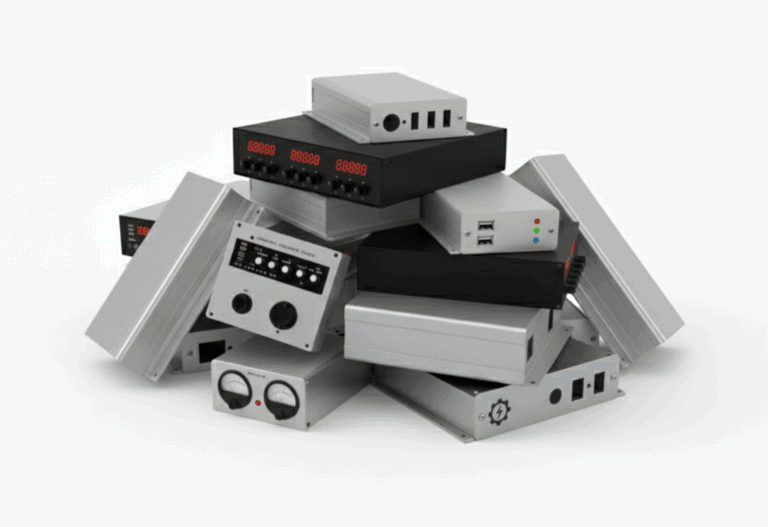
To support these real-world conditions, Lansing provides off-the-shelf enclosure platforms designed to for engineering to meet NEMA or IP ratings. Starting with Lansing’s proven GrayBox® and MicroPak® enclosure families, OEMs build on a reliable foundation and tailor each design to the specific environmental demands of their application.
Understanding IP Ratings in Enclosures
Ingress Protection (IP) ratings classify protection from solids and liquids under IEC 60529. They give engineers a starting point for determining the level of ingress protection needed.
Examples include:
- IP54: Limited dust, splashing water
- IP65: Dust-tight, water jets
- IP67: Dust-tight, temporary immersion
Why this matters
IP ratings offer a helpful guideline but the finished product only achieves that protection when the entire enclosure system – its construction, sealing strategy, machining, finishes, and installation – supports it. Engineering the enclosure to meet a target IP rating ensures it delivers consistent performance from initial design through final deployment.
Understanding NEMA Ratings in Enclosures
NEMA ratings, defined by NEMA 250, extend beyond dust and water resistance. They also address corrosion, icing, construction durability, and more making them particularly valuable in industrial and medical environments.
Common types include:
- NEMA 4/4X: Watertight; corrosion-resistant
- NEMA 6P: Prolonged submersion
- NEMA 12/13: Indoor dust, oil, and non-corrosive liquids
Because NEMA ratings includes structural and durability considerations, it provides an additional layer of clarity for applications exposed to harsh or variable conditions.
How Engineered-to-Meet Enclosures Add Value
Many OEM applications operate in environments that extend well beyond the assumptions of a standard rating. Engineering an enclosure to meet NEMA or IP ratings allows manufacturers to align protection levels with actual use conditions rather than generalized ones.
This approach supports long-term reliability and ensures that the full product assembly contributes to the intended level of protection
When Custom-Engineered Enclosures Are the Right Fit
Custom-engineered enclosures give OEMs added performance and reliability because engineers tailor them to the needs of the application. This engineering-led approach provides value in several important ways.
Precision for Specific Environments
Engineers can tailor custom enclosures to handle challenges such as chemical exposure, extreme temperatures, pressure washing, abrasive dust, or outdoor weather. This level of customization ensures compatibility with the intended NEMA and IP ratings for the device.
Improved Safety and Reliability
Engineering the enclosure as a system helps maintain sealing and structural integrity even after machining or component integration.
Durability and Longevity
Material and gasket selections can be optimized to support UV stability, corrosion resistance, temperature tolerance, and long-term wear.
Better Operational Performance
Proper sealing and thermal management ensure that internal components and help maintain accuracy and uptime.
Support for Specialized Compliance
Some devices must pass unique or non-standard environmental tests. Engineering to meet a standard ensures both performance and compliance are addressed together.
Beyond protection along, this approach helps OEM:
- Minimize field failures and warranty costs
- Reduce redesign and validation cycles
- Avoid unnecessary overspecification
- Achieve predictable performance in varying environments
- Strengthen trust in their product’s reliability
When Pre-Rated Enclosures Are a Good Choice
While engineered-to-meet solutions offer greater versatility, some applications can rely on standard pre-rated enclosures, particularly when:
- The environment closely matches the rating’s test conditions
- The enclosure will remain unmodified
- Exposure stresses are minimal and predictable
- Speed and cost are the primary considerations
Lansing’s engineered-to-meet approach supports these scenarios by giving OEMS a clear pathto higher protection levels and advanced configurations when their applications demand more.
Lansing Helps OEMs Meet NEMA & IP Ratings
Lansing’s standard enclosure families serve as reliable starting points for performance-driven customization. Their combination of structural integrity, modularity, and engineering support enables OEMs to reach the environmental protection they need.
In-house engineering support includes:
- Tailored gasket and sealing strategies
- Precision machining for ports, displays, and interfaces
- Material and finish selection for environmental and chemical resistance
- Structural design support for vibration, shock, and mounting loads
- Guidance for IP, NEMA, and environmental validation testing
By beginning with Lansing’s proven enclosure platforms, OEMs gain both an engineering head start and the flexibility to tailor the final design to the precise environmental demands of their application. If you’d like to explore how a GrayBox or MicroPak enclosure can be customized to meet your protection needs, contact Lansing’s technical team for dedicated support.

Lansing FAQs – Nema and IP
No. Lansing provides off-the-shelf enclosure platforms designed to be engineered to meet specific IP or NEMA performance requirements after customization.
Lansing can help assist with sealing strategies and engineering decisions for egress reduction. Lansing is not involved in validation test planning or testing as these are handled by a 3rd party IP/NEMA certifier of the customer’s choice.
Yes. Any modification can invalidate a pre-rated enclosure unless the sealing, gasketing, and structural features are engineered to maintain performance.
IP focuses on dust and water ingress. NEMA includes these plus corrosion resistance, icing, and structural durability requirements.
When the application is simple, unmodified, and fits neatly into a standard rating without environmental extremes.