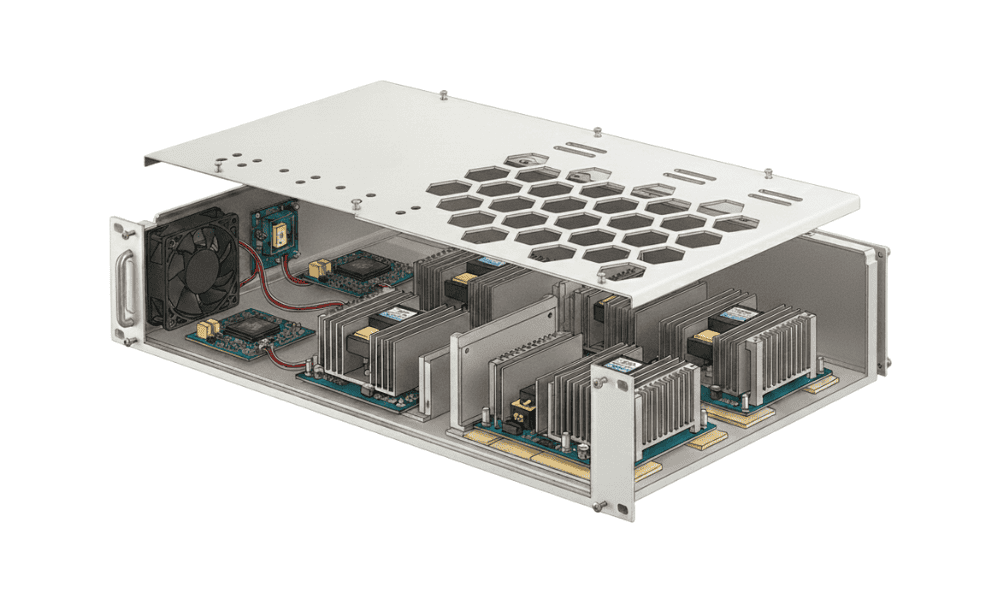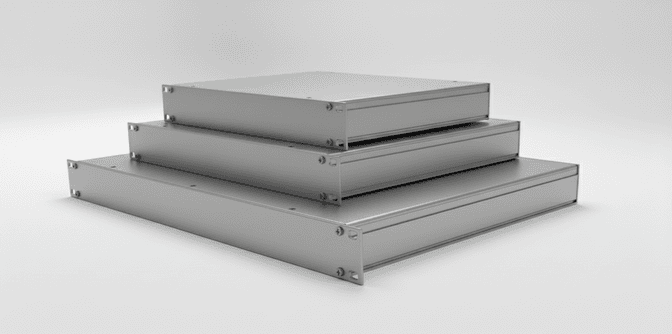
Aluminum is a popular material for electronic enclosures because it combines lightweight construction with durability, thermal performance, and a professional appearance. However, the manufacturing process affects design flexibility, production costs, and customization options.
Two common methods are extrusion and die casting. Understanding the differences can help you choose an aluminum enclosure that meets your application requirements without unnecessary tooling expenses.
What Is the Difference Between Extruded and Die-Cast Aluminum?
Both processes shape aluminum into usable components, but they work differently.
- Die-cast aluminum: Molten aluminum is injected under high pressure into a custom steel mold, producing complex three-dimensional shapes with integrated features.
- Extruded aluminum: A heated aluminum billet is pushed through a shaped die to create a continuous profile with a consistent cross-section. The profile can then be cut, machined, and assembled into an enclosure.
Each process offers advantages depending on the design’s complexity and expected production volume.
| Comparison | Die-Cast Aluminum | Extruded Aluminum |
| Design | Complex 3D shapes and integrated features | Consistent profiles that can be machined and assembled |
| Tooling | Requires dedicated molds with higher upfront costs | Uses extrusion dies to produce repeatable profiles |
| Production | Often economical for high-volume production of complex parts | Suited to varying quantities and enclosure configurations |
| Customization | Design changes may require mold modifications | Dimensions, cutouts, and mounting features can be adapted through machining |
Neither method is universally better. The right choice depends on the component’s complexity, production volume, and customization requirements.
When Does Die-Cast Aluminum Make Sense?
Die-cast aluminum is particularly useful for complex components that require intricate geometry, multiple integrated features, or specialized shapes.
For example, an automotive manufacturer producing hundreds of thousands of identical components can spread the initial mold investment across a large production run. When each component requires complex curves, mounting points, or other integrated features, die casting can be an efficient solution.
A die-cast aluminum enclosure can offer similar advantages when its specialized geometry and production volume justify the tooling investment.
However, that investment can become a barrier for smaller production runs or applications that may require design changes. When an enclosure does not need complex molded geometry, extrusion offers another way to achieve the desired result.
How Extruded Aluminum Makes Enclosure Design More Flexible
Unlike complex die-cast components, electronic enclosures can often be built by combining relatively simple parts into a three-dimensional assembly. The precision comes from how those parts are machined and fitted together, not necessarily from molding the entire enclosure into one intricate shape.
Extruded aluminum provides the building blocks for this approach. Standardized profiles can be cut to length, machined for openings and mounting features, and assembled into enclosures tailored to specific application requirements.
Instead of paying for a custom mold for each design, manufacturers can build an enclosure from existing profiles and configurable components. This makes extrusion particularly practical for prototypes, smaller production runs, and applications requiring different enclosure dimensions.
The key is how these standardized components are designed and combined to create an enclosure that meets specific requirements.
Lansing Instrument: Aluminum Enclosures Without the Custom Mold Investment
At Lansing Instrument, we make the benefits of aluminum accessible through a building-block approach to enclosure design.
We stock standardized aluminum extrusions and convert them into enclosure solutions using precision machining and configurable components. By using standardized extrusions and configurable components, Lansing can support enclosure requirements ranging from a single prototype to hundreds or thousands of units without requiring a dedicated mold for each design. This gives customers more flexibility to tailor dimensions and features while avoiding the upfront tooling investment that can make die-cast aluminum impractical for lower-volume applications.
Whether you need a small quantity for an initial design or a larger production run, Lansing’s approach helps you benefit from aluminum’s lightweight construction, durability, and professional appearance without the tooling investment associated with a custom die-cast design.
Looking for an aluminum enclosure that fits your application? Explore Lansing Instrument’s electronic enclosure solutions to find the right starting point for your design.