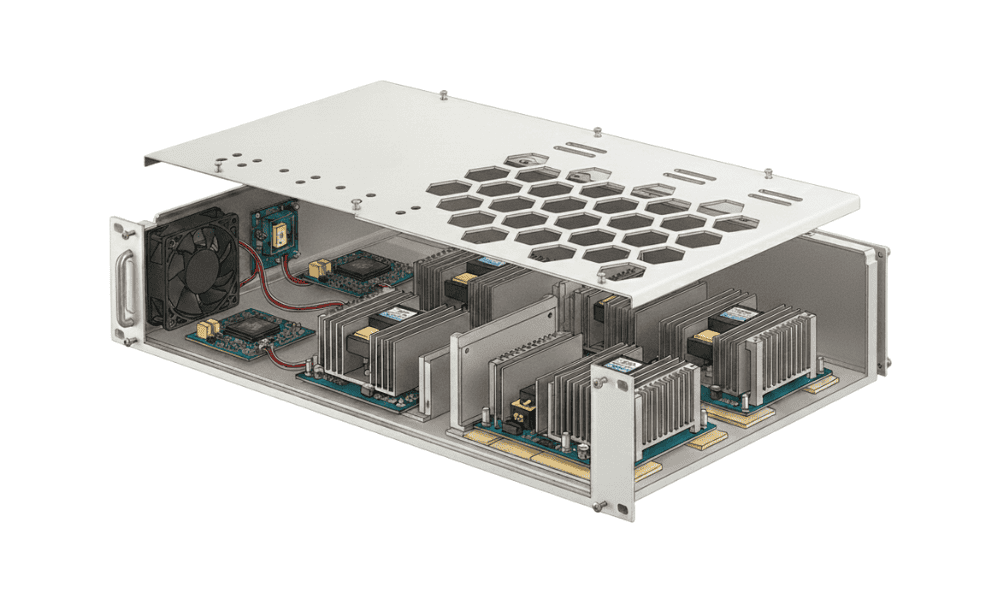

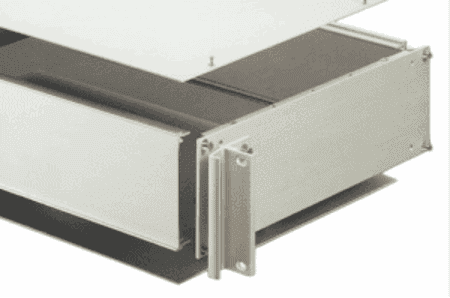
Aluminum provides a strong, lightweight foundation for electronic enclosures and the surface finish can affect how the enclosure performs in its operating environment. For corrosion resistant enclosures, two common electronic enclosure finishing options are anodizing and iridite coating. Both provide corrosion protection, but they offer different surface characteristics that can influence enclosure design. The right choice often comes down to whether the application places greater emphasis on surface durability or maintaining electrical conductivity.
Anodized vs. Iridite: What’s the Difference?
Anodized Aluminum (MIL-A-8625F)
Aluminum anodizing, referred to as MIL-A-8625F Type II, creates a thicker oxide layer on the aluminum surface, providing corrosion resistance along with increased hardness and abrasion resistance. This makes anodized aluminum well suited for applications where the enclosure may experience regular handling, wear, or abrasion.
For applications that require additional surface durability, hard coat anodizing, often referred to at MIL-A-8625F Type III, produces a thicker, harder finish than standard anodizing. Anodized aluminum can also provide a consistent finished appearance, making it a practical option when both enclosure durability and appearance are considerations.
Anodizing is typically a strong choice when:
- Surface hardness and abrasion resistance are priorities
- The enclosure will experience regular handling or physical wear
- Appearance is an important part of the enclosure specification
- Electrical conductivity at the enclosure surface is not a primary requirement
Iridite Coating (MIL-DTL-5541)
An iridite coating, also referred to as chem film coating, is a chromate conversion coating that provides corrosion protection while maintaining the aluminum’s electrical conductivity. This is a key difference in iridite vs. anodized finishes and can make iridite a better fit when the enclosure needs conductive contact surfaces for grounding or shielding applications.
Maintaining electrical conductivity can be particularly important when designing enclosures for EMI/RFI shielding. The enclosure itself provides the conductive barrier needed for shielding, but electrical continuity between mating surfaces and enclosure components also matters. A conductive finish can help support that continuity where electrical contact is required.
Iridite coatings are an important surface treatment when intending to powder coat components of an aluminum enclosure. The durability of the powder coat finish is very much dependent on the surface preparation accomplished with the iridite coating.
When selecting an iridite coating, it is important to confirm If RoHS compliance is required. If RoHS compliance is required, the coating must be hexavalent-free (Type II Trivalent Chromate / RoHS -compliant).
Iridite is typically a strong choice when:
- Electrical conductivity needs to be maintained
- Grounding or conductive contact surfaces are required
- EMI/RFI shielding is part of the enclosure design
- Corrosion protection is needed while maintaining a conductive surface
- Conductive surface is required for application of a powder coat finish
Choosing the Right Finish for Your Electronic Enclosure
The best finish depends on the enclosure’s operating environment and functional requirements.
Choose anodizing when surface hardness, abrasion resistance, and appearance are the primary considerations. For applications where the enclosure will be handled frequently or exposed to conditions that could cause surface wear, the anodized surface can provide an advantage.
Choose iridite when electrical conductivity, grounding, or EMI/RFI shielding is a priority. Iridite provides corrosion protection while preserving a conductive aluminum surface, making it useful where electrical contact between enclosure components needs to be maintained.
In some cases, there are multiple coating steps that are required so that both the benefits of anodized and iridite coatings can be achieved. Anodizing the entire component, followed by a masking step so that an iridite finish can be selectively applied, is done in situations where durability and conductivity are both critically important.
For corrosion resistant enclosures, finish selection should be considered as part of the overall enclosure design rather than treated as a final manufacturing consideration. Evaluating corrosion protection alongside surface durability, electrical performance, and appearance helps engineers select a finish that supports the enclosure’s intended application.
Lansing Instrument offers configurable aluminum electronic enclosures with finishing options suited to a range of environmental and performance requirements. Explore Lansing’s aluminum electronic enclosures to find a solution tailored to your application.