
Telecommunications infrastructure, networking equipment, and data center technologies continue to evolve rapidly, but one requirement remains consistent: electronic equipment must integrate reliably into standardized 19 inch rack environments. As electronics become more specialized, engineers are challenged with delivering application specific functionality while maintaining manufacturability, repeatability, and long-term product reliability.
Although designing a completely custom enclosure for every product may seem like the most flexible approach, it often increases engineering effort, extends development timelines, complicates manufacturing, and makes future product revisions more difficult. The challenge is not simply creating a custom enclosure. It is determining which aspects of the product truly need to change and which can remain standardized.
For many OEMs, the answer begins with a proven rackmount enclosure system. Rather than engineering a new enclosure for every application, experienced design teams build upon enclosure platforms that have already been engineered, refined, and proven. This allows engineers to focus on developing the technology inside the enclosure while relying on a structural foundation designed to support repeatable manufacturing and reliable performance.
Why Experienced OEMs Build on Proven Enclosure Platforms
Although electronics continue to evolve from one product generation to the next, the enclosure architecture often changes far less frequently. Rack compatibility, structural geometry, mounting methods, and overall enclosure construction typically remain consistent across multiple products.
The engineering challenge is rarely designing a rackmount enclosure from scratch. Instead, it is determining which enclosure features should remain standardized and which should evolve alongside the electronics.
Configurable enclosure platforms exist to solve this challenge. Rather than creating a new enclosure for every project, engineers begin with an established platform that has already been engineered for structural performance, manufacturability, and standardized 19 inch rack enclosure compatibility. Application specific features can then be modified without redesigning the underlying enclosure architecture.
This approach reduces engineering effort while improving consistency throughout the product lifecycle.
A Configurable Rackmount Enclosure System Supports Efficient Customization
A configurable enclosure platform is more than a standard enclosure with optional modifications. It is an engineered foundation that allows targeted customization while preserving the characteristics that support reliable manufacturing and long term performance.
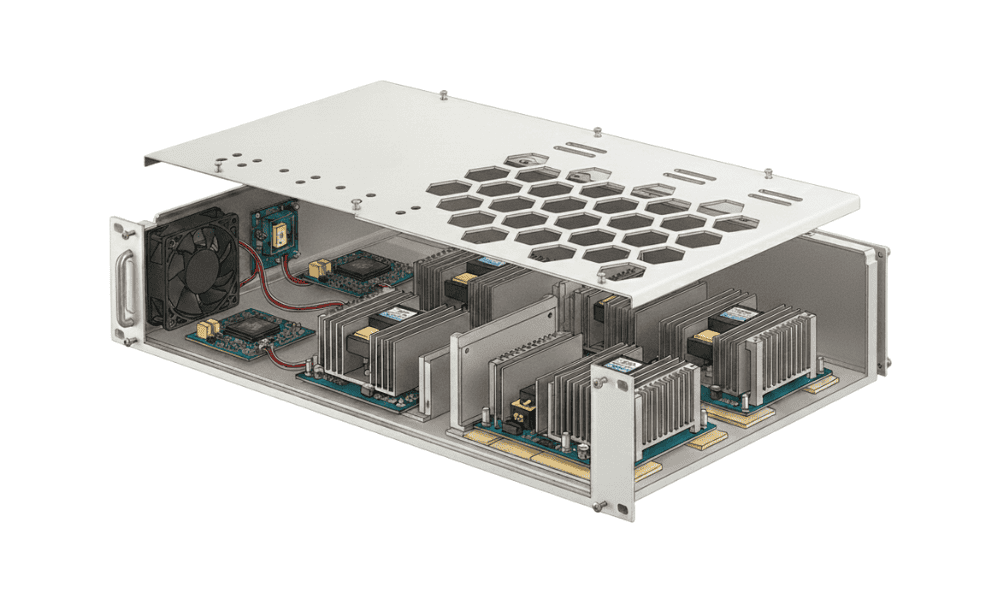
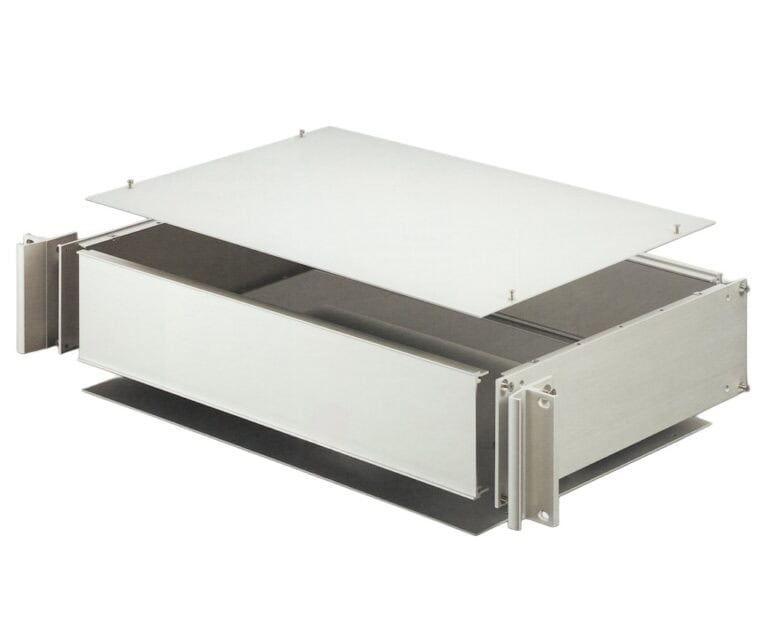
Lansing Instrument’s GrayBox family follows this engineering philosophy through standardized 1U rackmount enclosure, 2U rackmount chassis, and 3U rackmount enclosure configurations that serve as reusable building blocks for OEM product development.
Rather than redesigning structural components, engineers can focus customization on the areas that directly support product functionality, including:
- Front and rear panel cutouts
- Connector and interface layouts
- Ventilation features
- Internal PCB mounting
- Hardware locations
- Mounting accessories
Because the underlying enclosure architecture remains consistent, product teams can develop application specific solutions without repeatedly solving the same enclosure design challenges.
Engineering the Platform Means Engineering Long Term Performance
A configurable platform delivers value because the enclosure architecture has already been engineered to support performance before any product specific modifications are introduced.
Maintaining that foundation provides benefits that extend throughout manufacturing, assembly, and future product revisions.
Structural Integrity
Rackmount equipment frequently supports significant component weight while being installed, serviced, or extended on slide rails. An engineered enclosure platform helps maintain structural rigidity and mounting alignment, supporting reliable installation throughout the product lifecycle.
Dimensional Consistency
Standardized rack environments leave little room for dimensional variation. Maintaining consistent enclosure geometry helps ensure reliable integration into rack systems while supporting repeatable manufacturing across multiple production runs.
Assembly and Serviceability
A consistent enclosure platform simplifies assembly by maintaining standardized mounting locations, front and side panel interfaces, and internal hardware placement. This consistency also supports easier maintenance, future upgrades, and product revisions without requiring enclosure redesign.
Precision CNC Machining Preserves the Integrity of the Platform
Even proven enclosure platforms require application specific modifications. Connector openings, ventilation patterns, mounting provisions, and interface panels must all be customized without affecting the enclosure’s structural or dimensional integrity.
This is where precision CNC machining becomes an enabling capability.
Rather than serving as the primary source of value, precision machining allows engineers to implement modifications accurately and repeatably while preserving the engineered characteristics of the enclosure platform. Custom panel cutouts, ventilation features, and mounting locations can be produced consistently without compromising fit, alignment, or manufacturability.
By combining an engineered platform with precision manufacturing, OEMs gain the flexibility to configure products for specific applications while maintaining the repeatability needed for efficient production.
Better Enclosure Platforms Lead to Better Product Development
Building upon a proven rackmount enclosure system provides advantages that extend well beyond the initial design phase.
Instead of investing engineering resources into redesigning enclosure architecture for every product, OEMs can focus on developing the technologies that differentiate their equipment.
A configurable enclosure platform can help organizations:
- Reduce enclosure engineering effort and accelerate product development.
- Improve manufacturing consistency and repeatability across production runs.
- Maintain structural integrity and dimensional accuracy as products scale.
- Simplify assembly, maintenance, and future product revisions.
- Increase production efficiency while maintaining product quality.
- Deliver reliable integration into standardized rack environments for telecommunications, networking, and data center applications.
For manufacturers developing telecommunications, networking, industrial, and data center equipment, this approach provides an effective balance between customization, standardization, and long-term manufacturability.
Build Your Next Product on an Engineered Foundation
Selecting a rackmount enclosure system is about more than choosing a housing for electronics. It is about selecting an engineering foundation that supports efficient customization, repeatable manufacturing, and long-term product evolution.
For more than 60 years, Lansing Instrument has engineered configurable rackmount electronic enclosures that allow OEMs to build on proven enclosure platforms instead of starting from scratch. The GrayBox family combines standardized enclosure architecture with the flexibility to accommodate application specific modifications through precision manufacturing.
Whether designing telecommunications infrastructure, networking equipment, or industrial electronics, starting with a proven platform can simplify development while supporting reliable performance throughout the product lifecycle.
Explore Lansing’s GrayBox family to learn more about available 1U, 2U, and 3U configurations, or use the Enclosure Builder Tool to begin configuring an enclosure for your next application.