
Medical device development is often driven by electronics performance, leading many teams to design the printed circuit board (PCB) first and address the enclosure later. While this approach may accelerate early prototyping, it introduces risk as products move toward verification, validation, regulatory testing, and clinical use.
PCB enclosures are more than protective housings; they define mechanical stability, thermal behavior, grounding paths, shielding effectiveness, and service access. When enclosure requirements are addressed late in development, teams often encounter integration conflicts that disrupt testing continuity and create downstream challenges. A well-designed enclosure for PCB board integration supports regulatory compliance, simplifies testing, and reduces redesign risk as products move from prototype to deployment.
Why PCB Enclosure Design Matters in Medical Device Development
Medical electronics must perform reliably under strict regulatory oversight. Enclosure design plays a direct role in protecting sensitive components while supporting consistent performance requirements.
When enclosure design is deferred, several common challenges emerge:
- PCB mounting instability: Without defined mounting features, boards may shift or require temporary supports during testing
- Connector and cable conflicts: Misalignment and routing constraints can limit accessibility and usability
- Thermal buildup: Compact assemblies require controlled airflow and heat dissipation.
- Electromagnetic (EMI) shielding concerns: Poor enclosure design can compromise shielding effectiveness.
When systems are evaluated under more controlled and repeatable conditions, these issues can surface, leading to enclosure changes that may require updates to documentation, partial re-verification, and additional regulatory review.
Addressing PCB enclosure requirements early establishes a stable mechanical framework for downstream testing.
How Enclosure Architecture Influences Regulatory Compliance
In medical device design, enclosure architecture is closely tied to safety and regulatory requirements. Many devices must comply with internationally recognized standards formedical electrical devices such as IEC 60601-1, where enclosure-related factors directly influence performance
PCB enclosure design impacts several key compliance areas:
Grounding and electrical safety
Controlled grounding paths help reduce electrical hazards. Metal enclosures, such as aluminum platforms, support predictable grounding when designed appropriately.
Thermal management
Enclosure materials, internal spacing, and ventilation influence heat dissipation and long-term stability.
Electromagnetic compatibility (EMC)
Shielding performance is influenced by enclosure material, panel interfaces, and connector placement. Effective enclosure design can help reduce electromagnetic interference that might disrupt sensitive electronics and mitigate variability during testing.
Service and maintenance access
Devices in clinical environments must allow access to internal components without introducing damage or variability. Enclosure design determines how reliably technicians can access boards, connectors, and internal modules.
Standards governing PCB design and assembly, such as IPC guidelines for printed board layout and electrical reliability, further reinforce the need for stable mechanical integration throughout the device lifecycle.
Why Early Enclosure Selection Reduces Integration Risk
PCB layout decisions directly define enclosure requirements such as internal clearances, airflow paths, mounting strategies, and access points.
Selecting an enclosure platform early allows teams to organize:
- Connector placement and panel layouts
- Cable routing paths
- Internal board spacing and mounting
- Thermal airflow and component clearance
When enclosure selection happens later in the process, these relationships must be resolved under tighter constraints, often during later-stage testing.
The Value of Configurable PCB Enclosure Platforms
Standardized enclosure platforms provide a balance between structural consistency and design flexibility. Rather than treating each iteration as a new mechanical design, engineers work within a defined architecture that supports repeatability.
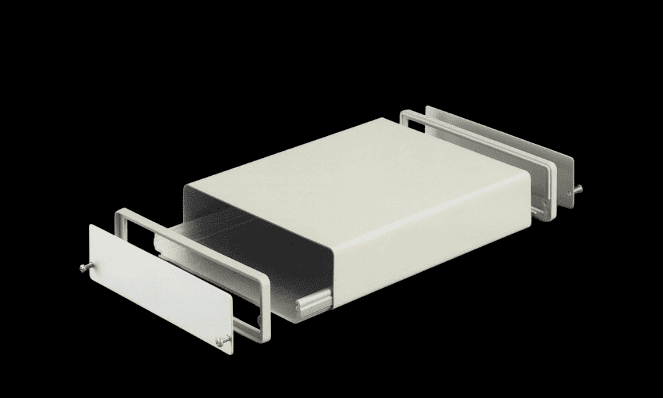
For example, Lansing’s MicroPak modular enclosure platform is designed to support PCB integration through:
- Integrated PCB mounting rails and hardware
- Consistent internal dimensions
- Configurable front and rear panel machining
- Durable aluminum construction for shielding and thermal performance
These features allow engineers to adapt panel layouts and connector positioning without changing the core structure.
Supporting Verification and Validation Testing
Verification and validation depend on stable mechanical conditions across test units.
A proven enclosure platform helps stabilize key variables during testing:
- Consistent board alignment across test units
- Repeatable connector positioning
- Predictable thermal performance
- Reliable shielding characteristics
When early enclosure selection accounts for these factors, teams can focus on system performance instead of adjusting mechanical integration during testing.
Maintaining Design Continuity Through Clinical Use
Once a medical device reaches clinical environments, enclosure performance must remain consistent under operational conditions. Mechanical stability, accessibility, and environmental performance continue to influence device reliability.
A robust custom PCB enclosure designed around proven architecture helps ensure that:
- Electronics remain securely mounted during transportation and operation
- Heat and electrical interference remain controlled
- Connectors and cables remain accessible for service and upgrades
- Device performance remains consistent over time
By establishing a strong mechanical foundation early in development, manufacturers reduce the likelihood of enclosure redesigns after deployment, which can introduce regulatory complexity and operational risk.
Building a Strong Mechanical Foundation for PCB-Based Devices
Enclosure design directly impacts device safety, compliance, and long-term performance. When PCB enclosures are integrated early, teams can better control grounding, thermal management, shielding, and mechanical stability.
Standardized enclosure platforms provide a practical approach by combining predictable internal architecture with configurable features. This allows development teams to maintain a consistent mechanical foundation while adapting to evolving design requirements. For medical device developers, this approach provides a more controlled and scalable path from prototype to deployment.
Explore Reliable PCB Enclosures for Your Next Design
Lansing Instrument Corp. provides precision-engineered aluminum enclosures designed to protect and organize PCB-based electronics throughout development and deployment. Their modular platforms offer integrated mounting features, configurable panels, and durable construction to support reliable device integration.
Browse Lansing’s PCB enclosure solutions or try our interactive builder to explore configurations and design your enclosure with confidence.