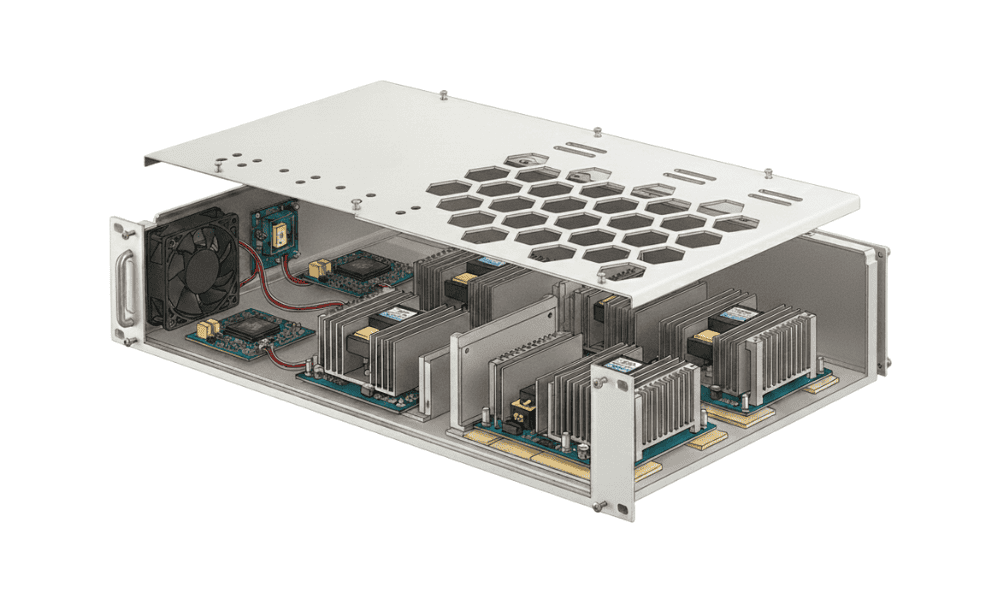

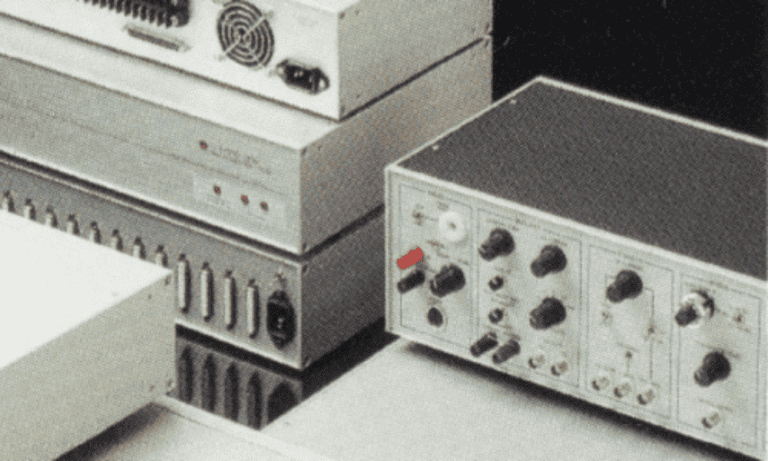
Modern power systems inherently generate heat and electromagnetic noise through high frequency switching, power conversion, and continuous operation. As system density increases, thermal and electromagnetic effects become tightly coupled, directly influencing temperature stability, signal integrity, and overall system reliability.
These interactions are no longer secondary considerations. They define system performance under load. The enclosure establishes the boundary conditions that govern how thermal energy and electromagnetic fields behave within and around the system.
Within this context, material selection becomes a primary driver of system level performance, with aluminum emerging as a key material to consider in industrial electronics where power density and signal sensitivity must be balanced.
Enclosure’s Role in System Level Performance
Enclosures define the conductive and physical boundaries that determine how heat and electromagnetic interference are distributed and contained.
Inadequate thermal management leads to localized instability, while unmanaged electromagnetic interference disrupts signal integrity and communication between components. The enclosure directly influences how these effects are controlled, positioning it as an active element rather than a passive housing.
Why Enclosure Behavior Matters
In practice, these interactions shape:
- Temperature stability across components
- Signal stability between control and power systems
- Overall system reliability under continuous operation
Role of Aluminum in Heat Dissipation
The aluminum enclosure is widely used in power system design due to its high thermal conductivity and predictable heat transfer characteristics. It acts as an effective heat spreading medium, allowing thermal energy to move efficiently across the enclosure structure instead of remaining concentrated at the source.
Thermal Conductivity and Heat Spreading Practice
As heat moves through the enclosure, aluminum enables several important behaviors that improve overall heat dissipation:
- Heat is conducted away from active components quickly
- Thermal energy spreads across the enclosure surface rather than accumulating locally
- Heat transfers more efficiently into the surrounding environment
By reducing localized hotspots, aluminum promotes more uniform temperature distribution and improves passive thermal management without adding system complexity.
Managing Electromagnetic Interference with Aluminum
Aluminum’s electrical conductivity allows it to function as a continuous EMI shielding boundary. As an enclosure material, it defines how internally generated interference is contained while also limiting the impact of external noise. In many applications, this forms the basis of an EMI shielded enclosure.
Electrical Conductivity and Signal Stability
This conductive boundary contributes to stable system behavior by ensuring that:
- Internally generated electromagnetic interference remains contained
- External interference has less opportunity to couple into the system
- Electrical conditions remain consistent for signal transmission
In systems where high power switching and sensitive control signals operate in close proximity, maintaining this level of signal stability is essential for predictable performance.
Performance Driven by Material Properties
A key advantage of an aluminum enclosure is that both thermal management and EMI shielding are inherent to the material itself. These capabilities are achieved without relying on additional subsystems in many industrial electronics applications, which simplifies design while maintaining consistent results.
What This Means at the System Level
Because these properties are built into the material, they naturally lead to:
- Less dependence on active cooling or supplemental shielding
- A more streamlined system architecture
- Stable performance across a range of operating conditions
This creates a reliable foundation for managing both heat dissipation and electromagnetic interference.
Design Factors That Enhance Enclosure Performance
While aluminum defines baseline behavior, enclosure design determines how effectively those properties are applied through decisions around conductive continuity, geometry, and integration.
Continuous Conductive Structures
Maintaining uninterrupted conductive paths across panels and interfaces preserves shielding effectiveness and supports electromagnetic containment within an EMI/RFI shielded enclosure.
Surface Area and Geometry
The size and shape of the enclosure influence how efficiently heat is transferred from internal components to the external environment, directly affecting heat dissipation performance.
Integration Features
Panel layouts, cutouts, and mounting approaches must support system requirements while preserving thermal pathways and shielding continuity.
Design enhances material performance by shaping how these factors work together in real applications.
Why Aluminum Remains a Preferred Choice for Enclosures
Effective power system performance depends on controlling both thermal and electromagnetic conditions at the enclosure level. Aluminum addresses both through its inherent conductivity, enabling efficient heat transfer alongside electromagnetic containment.
Key Advantages in Application
When applied in enclosure design, aluminum contributes to:
- Efficient heat dissipation across the enclosure structure
- Built in electromagnetic interference control
- A consistent foundation for system performance
- Reduced reliance on additional thermal or shielding solutions
- Cost effective for prototypes as well as high volume production
- Suitable for quick turn production with experienced machine shop vendor
This combination supports reliable operation across industrial electronics applications, where both heat and signal behavior must remain controlled under varying conditions.
Lansing’s aluminum enclosures leverage these inherent properties within configurable designs to provide a reliable foundation for heat dissipation and electromagnetic interference control in power system environments. For solutions aligned with these principles, explore Lansing’s aluminum electronic enclosures or browse the shop electronic instrument enclosures to identify configurations suited to specific system requirements, or use the Enclosure Builder Tool to configure a design tailored to specific performance needs.